
Building Your Visual Identity System
A visual identity system is the set of consistent visual elements that define how your content looks across every piece you publish. For face-showing creators, the face itself is the primary visual anchor. For faceless creators, the system must be built from other elements: colour, lighting, composition, texture, and styling. These elements need to be defined deliberately and applied consistently.
Start with a mood board. Collect 15 to 20 images that represent the aesthetic you want your account to embody. These can come from Pinterest, Instagram, photography sites, or anywhere you find visual inspiration. Look for patterns in what you are drawn to. Do you gravitate toward warm tones or cool tones? Soft, diffused lighting or dramatic, high-contrast shadows? Clean, minimalist compositions or richly textured, layered scenes? The patterns in your mood board reveal your natural aesthetic preferences, and those preferences become the foundation of your brand.
From your mood board, extract three to five core visual principles that will govern your content. These might be: warm golden tones in every image, soft natural lighting with no harsh shadows, close-up compositions that fill the frame, a recurring prop or accessory that appears in most shots, and a consistent background style. Write these principles down. They are your brand guidelines, and every piece of content you produce should be evaluated against them before it goes live.
Choosing and Maintaining a Colour Palette
Colour is the single most powerful branding tool available to a faceless creator. Research in visual psychology consistently shows that colour is processed faster than text or shape, which means your colour palette is the first thing a viewer registers when they see your content. A subscriber scrolling through a Reddit feed will notice a distinctive colour tone before they register the content itself. That split-second recognition is what stops the scroll and builds brand association over time.
Choose a primary colour tone that aligns with the mood you want your account to communicate. Warm tones, golds, ambers, soft oranges, and muted reds, convey intimacy, sensuality, and approachability. Cool tones, blues, teals, silvers, and muted purples, communicate mystery, elegance, and exclusivity. Neutral tones, whites, greys, beiges, and earth tones, signal minimalism, sophistication, and high-end aesthetic. Your niche may also influence this choice. Lingerie content often works well with warm, romantic tones. Fitness content tends toward cooler, high-contrast palettes. Feet content performs well across multiple colour profiles but benefits strongly from warm, inviting tones.
Once you have chosen your primary tone, apply it consistently through lighting, editing presets, wardrobe choices, and background selection. Use the same editing preset or filter across every photo so that your colour grading is uniform. Choose wardrobe colours that complement your palette rather than clash with it. Select backgrounds and shooting locations that reinforce your colour story. Over time, this consistency creates an unmistakable visual signature. Our content batching guide covers how to streamline your editing workflow so that colour consistency does not add extra time to your production process.
Defining Your Photography Style
Beyond colour, your photography style encompasses the angles, compositions, and framing techniques that make your content visually distinctive. Faceless content requires more creative composition than face-showing content because the absence of a face means the viewer’s eye needs to be guided deliberately through each image. Without a face to anchor attention, composition does the work.
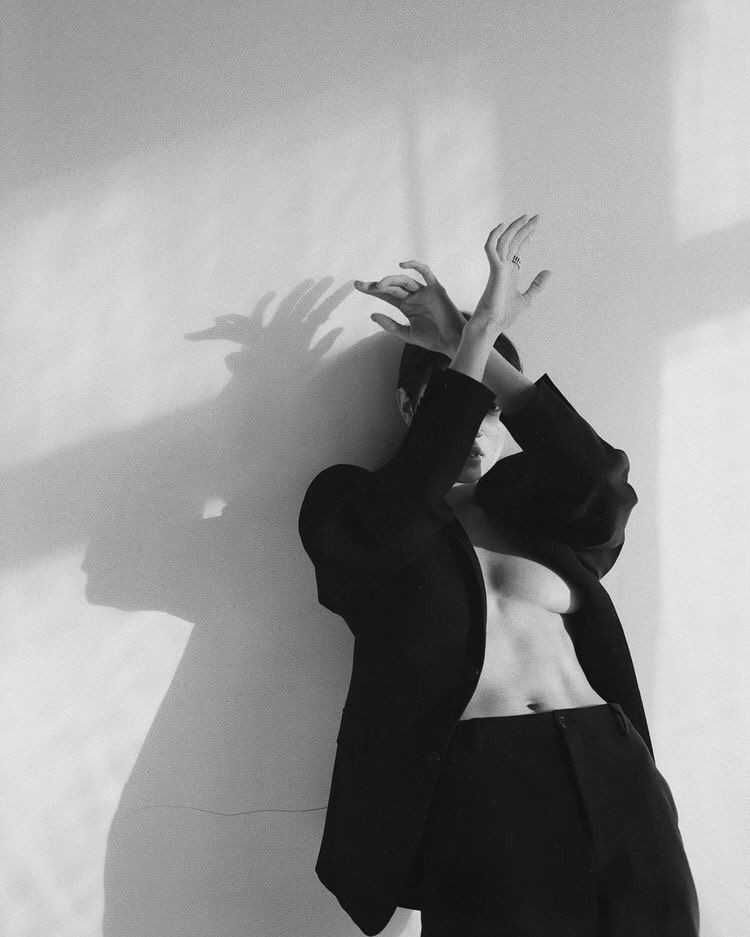
Develop two to three signature angles or compositions that you return to regularly. These become your visual fingerprints. A feet creator might develop a signature overhead shot, a profile angle with pointed toes, and a close-up texture shot. A lingerie creator might favour over-the-shoulder compositions, mirror reflections, and silhouette shots against backlit windows. A fitness creator might use overhead gym floor shots, close-ups of specific muscle groups, and silhouette poses against plain backgrounds. These recurring compositions give your feed a cohesive look and make individual posts instantly attributable to your account.
Lighting deserves its own attention. Consistent lighting is one of the hardest elements to maintain but one of the most impactful for brand recognition. If your brand uses soft, diffused natural light, commit to shooting during the same time of day near the same window or in similar conditions. If your brand uses dramatic, directional lighting, invest in a simple lighting setup that you can replicate every shooting session. The goal is not perfection. It is replicability. A subscriber should feel the same visual mood in every photo, even if the content and setting vary. Our tools and equipment guide covers affordable lighting setups and camera equipment for faceless creators.
Developing Your Caption Voice
Your caption voice is the textual extension of your visual brand. It is how your persona speaks when it is not communicating through images. A strong caption voice reinforces the mood your visuals create and adds a layer of personality that deepens the subscriber’s connection to your brand. A weak or inconsistent caption voice undermines even the strongest visual identity because it breaks the immersion.
Define your caption voice along three dimensions: tone, length, and vocabulary. Tone can range from playful and teasing to mysterious and understated to confident and direct. Length should be consistent: if your brand is minimalist, keep captions to one or two sentences. If your brand is more expressive, three to four sentences with personality and storytelling work well. Vocabulary means the specific words and phrases your persona uses regularly. A playful persona might use casual language, pet names for subscribers, and rhetorical questions. A mysterious persona might use fewer words, ellipses, and suggestive fragments that leave interpretation to the reader.
Write 10 sample captions before you launch and review them as a set. Do they sound like they came from the same person? Do they reinforce the mood of your visual content? Would a subscriber reading these captions form a clear impression of your persona’s personality? If the answer to any of these is no, refine until there is a clear through-line. Your caption voice should feel as natural and consistent as a conversation with someone you know well. Our bio and profile tips guide covers how to extend this voice into your profile bio, welcome message, and tip menu descriptions.
Designing Your OnlyFans Profile
Your OnlyFans profile is your storefront, and for faceless creators it does all of the selling that a face and personality would do on a face-showing account. Every element of your profile should reinforce your brand and communicate your value proposition within the first five seconds a visitor spends on the page.
Your banner image is the largest visual element and the first thing visitors see. It should be your strongest branded image: something that immediately communicates your niche, your aesthetic, and the quality of content subscribers will receive. Do not use a generic image or a text-based banner. Use a high-quality, on-brand photo that makes the visitor want to see more. Your profile picture should be consistent with your banner’s aesthetic and work as a recognisable thumbnail across the platform. For faceless accounts, this is typically a cropped, on-brand body shot or a stylised close-up that aligns with your niche.
Your bio is the text equivalent of a pitch. It should communicate three things in under 150 words: what type of content you create, what makes your account different from similar ones, and what the subscriber gets for their money. Avoid generic phrases like “new content daily” or “come have fun.” Instead, be specific to your niche and persona: “Exclusive lingerie sets, behind-the-scenes clips, and weekly themed drops. PPV previews in your DMs every Wednesday and Saturday.” Specificity signals professionalism and tells the potential subscriber exactly what they are buying. Our pricing guide covers how to align your profile’s value proposition with your subscription and PPV pricing structure.
Maintaining Brand Consistency Across Platforms
Your brand does not live on OnlyFans alone. It extends to every platform where you promote: Reddit, Twitter, and anywhere else you drive traffic. Cross-platform brand consistency means that a potential subscriber who sees your content on Reddit, clicks through to your Twitter, and then visits your OnlyFans page should experience the same visual identity, the same tone of voice, and the same overall aesthetic at every step. Any inconsistency in this journey creates friction and reduces conversion. Our Reddit strategy guide and Twitter strategy guide cover platform-specific marketing tactics, and the branding principles here should underpin both.
On Reddit, your profile picture, banner, and bio should match your OnlyFans branding. The content you post should use the same colour grading, the same angles, and the same caption style as your OnlyFans wall. On Twitter, your header image, profile picture, and pinned tweet should all reinforce your brand’s visual identity. Even the way you engage in replies and quote tweets should reflect your persona’s voice. Subscribers who discover you on one platform and follow you to another are testing whether the brand they liked is real and consistent. Every confirmation strengthens their intent to subscribe.
Create a simple brand reference sheet that you keep accessible during every work session. It should include your colour palette codes, your editing preset name, your two to three signature compositions, your caption voice guidelines, and links to your profile images for each platform. This document takes 20 minutes to create and saves hours of inconsistency-related problems over the following months. When you batch content, reference it. When you write captions, reference it. When you update any profile, reference it. Consistency is not about memory. It is about systems.
Evolving Your Brand Over Time
A brand is not a permanent fixture. It should evolve as your audience grows, your content skills improve, and your understanding of your niche deepens. The key is evolving gradually rather than reinventing. Subscribers who built loyalty around a specific aesthetic will feel disoriented if the entire visual identity changes overnight. Small, incremental shifts are absorbed naturally. Dramatic overhauls cause churn.
Review your brand quarterly alongside your content performance data. Which posts generated the most engagement? Which PPV messages had the highest purchase rates? Which Reddit posts drove the most profile clicks? The answers often point toward specific visual elements, angles, or content types that resonate most strongly with your audience. Lean into what works. If your overhead shots consistently outperform your side-angle shots, make overhead your primary composition and develop new variations within that style. If warm-toned content outperforms cool-toned content, shift your palette further toward warmth. Our posting routine guide covers how to track and interpret these performance metrics.
When you do make changes, communicate them positively. A story or caption that says “I’ve been experimenting with a new style this week, let me know what you think” invites subscribers into the evolution rather than surprising them with it. Framing changes as experiments gives you permission to try new things while maintaining the option to return to what worked if the audience responds negatively. Brand evolution is a conversation with your audience, not a unilateral decision. Our subscriber retention guide covers how to maintain subscriber loyalty through transitions and changes.